海洋光化学研究室の研究活動
Marine Photochemistry Lab. Activities
海洋光化学研究室では,日本の広大な領海・排他的経済水域に眠る海洋資源・エネルギーの利活用に資する新しい光化学を研究しています。クリーンな太陽光エネルギーを使って日本を資源小国から資源大国へ大転換する新しい光化学の開拓にあなたも挑戦してみませんか?!
At the Marine Photochemistry Laboratory, we are conducting research on innovative photochemistry that will contribute to the utilization of marine resources and energy in Japan’s vast territorial waters and exclusive economic zone. Let's join us in pioneering this new field of photochemistry aiming to transform “resource-poor” Japan into a resource-rich nation using clean solar energy!
当研究室における研究の心構え
The mindset for research in our Lab.
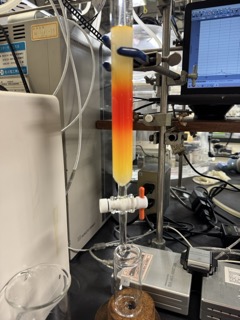
ルテニウム光増感剤を精製中
Purification of Ru photosensitizer
大学での研究活動は給料をもらう仕事では有りません。研究室配属から始まる卒業研究は、学生の皆さんが自分へ投資して自身の知識と技術に磨きをかけ、自身の将来を切り開く能力を養うためのトレーニングです。当研究室では、学生自らが成長する意思を持ち、失敗を恐れずに様々な実験に挑戦し、その経験を糧に成長する姿勢を大切にしていきます。
Research in university is not a job for a salary. The graduation research, which begins with your assignment to a laboratory, is a training program designed to help you invest in yourself, refine your knowledge and skills, and develop the ability to shape your own future. In our laboratory, we value students who are committed to their own growth, who are willing to take on challenges without fear of failure, and who use those experiences as a foundation for further development.
卒業研究は、大学3年生までの「科学技術として確立された事柄を理解する」受動的な学習姿勢から、「正解が何かわからない状況で仮説を立てて実験し、新物質や新反応を理解していく」能動的な研究姿勢への大転換期に相当します。研究ではすぐに望みの成果が得られることはほとんど有りません。粘り強く実験して仮説の検証を繰り返し、物質・現象・反応を少しずつ理解していくプロセスを楽しむことが大切です。
The graduation research marks a major transition from the passive learning approach—characterized by “understanding established scientific and technological concepts”, to an active research approach involving “formulating hypotheses and conducting experiments in situations where the correct answer is unknown, and gaining an understanding of new substances and reactions.” It is rare to achieve the desired results immediately. It is important to persevere with experiments, repeatedly test hypotheses, and take pleasure in the process of gaining that understanding.
日々の研究活動
Daily research activities
当研究室は平日9:00-18:00で、各自が自身の研究活動時間6時間を決めるフレックスタイム制で研究活動をしています。朝型の人も夜型(深夜型除く)の人もそれぞれの活動時間に合わせて研究可能な自由度を確保しています。
Our laboratory operates on weekdays from 9:00 a.m. to 6:00 p.m. under a flexible work schedule system, where each member determines their own 6-hour research period. This ensures that both morning people and night owls (excluding those who stay up very late) have the flexibility to conduct research according to their own schedules.
研究活動に支障を来さない範囲であれば、サークルやアルバイトで社会経験を積むことも容認しています。貴重な大学生活を有意義にしましょう!
We encourage students to gain social experience through club activities and part-time jobs, provided it does not interfere with their academic studies. Make the most of your valuable college years!
毎月1回の研究相談会での発表、半期に1回の雑誌会での発表があります(詳細は下記参照)。これらの研究室ゼミでの発表・議論を通じて、自分の研究への理解を深めながら、プレゼンテーション能力・コミュニケーション能力も養成していきましょう。
There are monthly presentations at the research consultation and biannual presentations at the journal meetings. Through these presentations and discussions in the lab seminars, students will deepen their understanding of their own research while developing their presentation and communication skills.
卒業研究の流れ
Overview of graduation research
研究室配属後、各自の研究テーマは教員と相談して決めます。研究室で実施可能な内容であれば、学生の提案を研究テーマに積極的に取り込むことも可能です。
After being assigned to a laboratory, students will determine their individual research thesis in consultation with lab. staff. Provided the research is feasible within the laboratory, we are open to incorporating students’ proposals as research topics.
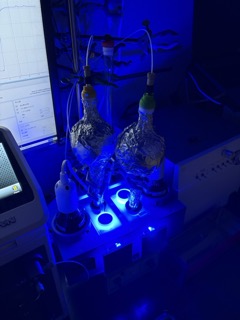
青色光照射で光触媒反応を追跡中
Photocatalytic reaction under blue LED
教員または自分のテーマに近い研究をしている先輩と一緒に実験を始めます。試薬の管理方法、実験器具・機器の扱い方、廃液処理など、研究活動に必須な知識・技術を学びます。この過程で新しい化合物の合成技術や各種分析機器の測定原理・使用法を習得できます。
Student will begin conducting experiments alongside a Lab. staff or a senior student working on a similar topic. Student will learn the knowledge and skills essential for research activities, such as how to manage chemicals, handle laboratory equipment and instruments, and dispose of experimental wastes. Through this process, student will master techniques for synthesizing new compounds, as well as the measurement principles and usage of various analytical instruments.
毎月1回、研究相談会で実施した実験の内容や結果を取りまとめて報告するとともに、次の実験計画について相談・議論します。この過程で科学的根拠に基づく論理的思考を習得し、プレゼンテーション能力やコミュニケーション能力に磨きをかけていきます。
Once a month, we hold a research consultation session to summarize and report on the content and results of the experiments conducted, and to discuss and plan the next set of experiments. Through this process, students develop logical thinking based on scientific evidence and hone their presentation and communication skills.
半期に1回、雑誌会で自身の研究テーマに関連した英語論文を精読し、研究室メンバーに紹介するとともに内容について議論します。関連研究を学ぶことで、自身の研究テーマの立ち位置や特徴を把握・理解していくとともに、関連研究の知見を積極的に自身の研究にフィードバックしていきます。
Once every six months, during our journal meetings, we closely read an research paper related to our own research topics, introduce it to the lab members, and discuss its content in detail. By studying related research, we gain a clearer understanding of the position and unique characteristics of our own research topics, and actively incorporate insights from that research into our own work.
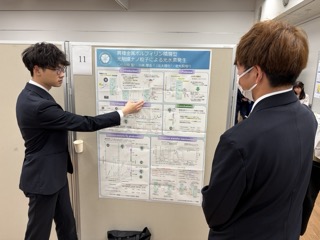
学会でポスター発表中
Poster presetation in conference
新しい研究成果が得られたら、学会での成果発表を目指します。少なくとも年1回は学会で発表することが目標です。他大学の大学院生や当該分野の専門の先生との議論を通じて共同研究へつながる貴重な機会にもなります。
When new research findings are obtained, we aim to present them at academic conferences. Our goal is to present our findings at least once a year. This also provides a valuable opportunity to engage in discussions with graduate students from other universities and professors specializing in the field, which can lead to collaborative research.
学士は一年間、修士は二年間、博士は三年間の研究成果を学位論文としてまとめ、論文発表会で発表、合格することで学位が取得できます。学位論文や投稿論文の執筆、論文発表を通じて文章執筆能力・プレゼンテーション能力を鍛えつつ、論理的な思考やディベート能力をさらに磨き、科学者として社会で活躍できる能力を習得します。
Students must compile their research findings into a thesis—one year for a bachelor’s degree, two years for a master’s degree, and three years for a doctoral degree—and present it at a thesis defense; upon passing the defense, they are awarded their degree. Through the writing of theses and journal articles, as well as thesis presentations, students hone their writing and presentation skills while further refining their logical thinking and debating abilities, thereby acquiring the skills necessary to thrive in society as scientists.